
How to collect overdue invoices without losing clients
A practical guide to collecting overdue invoices: payment terms that prevent delays, a reminder sche...
Read →Compare the debt snowball and the debt avalanche method, learn how to build your payoff plan step by step, and pick the one you can actually stick to.
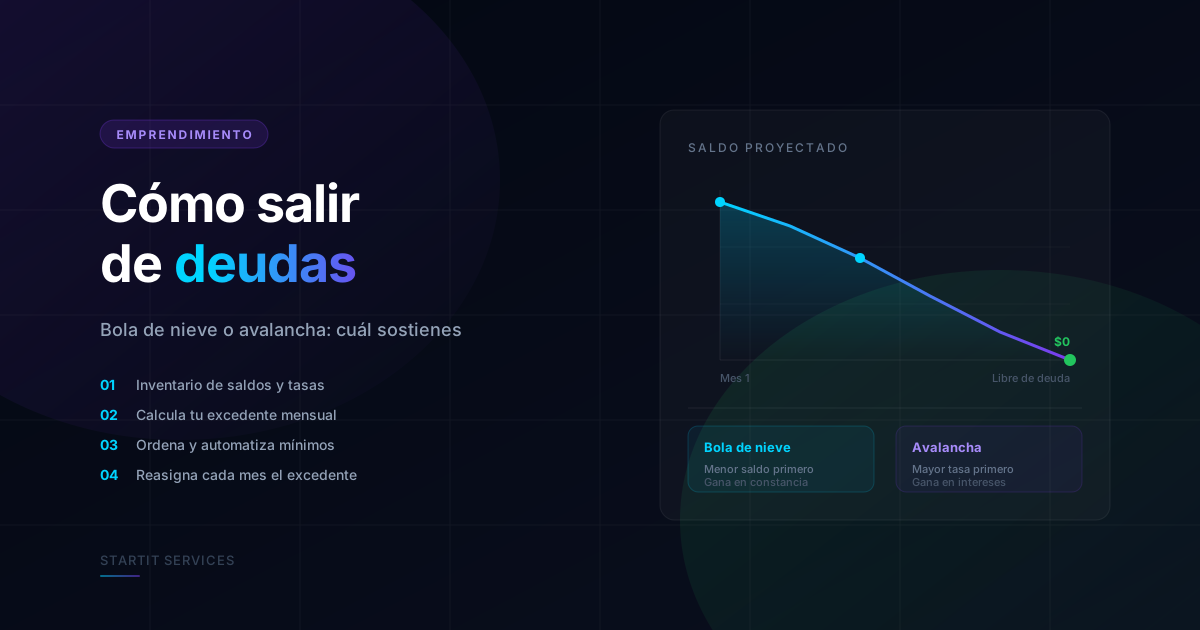
Getting out of debt doesn't come down to finding a financial trick: it comes down to having a plan you can sustain for months. The two most widely used strategies — snowball and avalanche — reach the same destination by different routes. Choosing well starts with understanding how they actually differ.
No plan works without data. Before choosing a strategy, write down in a single table, for every debt:
Then add up your stable monthly income and your fixed expenses. The difference is your extra payment capacity: the money you can put toward one specific debt on top of every minimum. That number, however small, is the engine behind both methods.
You pay the minimum on everything and put all the surplus toward the smallest balance, regardless of its rate. Once it's cleared, the payment you were making rolls into the surplus and attacks the next smallest. The amount you throw at each debt grows like a snowball.
In favor: it produces visible wins early. Wiping out a whole debt in the first or second month creates a sense of progress that sustains the habit, and it cuts the number of payments you juggle each month.
Against: if your small debts carry low rates, you'll pay more total interest than with the avalanche.
You pay the minimum on everything and put the surplus toward the highest interest rate. Once that's cleared, you move to the next highest.
In favor: it's mathematically optimal. It minimizes the interest you pay and generally shortens the total time to debt freedom.
Against: if your most expensive debt is also your largest, you can go many months without closing a single account. For a lot of people, that absence of visible progress is exactly what causes them to quit.
The honest comparison is this: avalanche wins on money, snowball wins on consistency. An optimal plan you abandon in month four is worse than a suboptimal plan you finish.
Some practical rules:
A hybrid approach is perfectly valid too: clear one or two small debts for momentum, then reorder the rest by interest rate.
Both methods share the same weak point: the spreadsheet stops being updated. Without tracking there's no reassignment of the surplus, and without reassignment the snowball never rolls.
Capital Path is Startit's app built for exactly that: it records your debts, projects your payoff timeline for the plan you choose, and tracks progress week by week with alerts so the extra payment doesn't quietly get spent elsewhere. It's the companion app to the book From Debt to Capital, and it turns the method into a habit with concrete dates instead of an intention.
With all that said, no method reduces your debt on its own: the monthly surplus you consistently direct at it does. Pick the order you find easiest to sustain, automate what you can, and review the plan once a month. That discipline matters more than the gap between snowball and avalanche.
A practical guide to collecting overdue invoices: payment terms that prevent delays, a reminder sche...
Read →The Latino SMB market in the US is growing faster than ever. And digital presence remains their Achi...
Read →